A Christmas cookie exchange is supposed to trade variety, not create a week of baking pressure. The host's most useful job is to make the rules small and clear: how many people are participating, how many cookies each person should bring, what information travels with each batch, and how everyone will pack a fair assortment to take home. You can host a warm, generous swap without asking for an enormous pile of cookies.
QUICK REFERENCE
The four decisions to put on the invitation
| Decision | Guest instruction | Host check |
|---|---|---|
| Format | Trade, tasting, or both | Keep sample cookies separate |
| Quantity | Exact pieces per recipient | Recount after RSVPs |
| Ingredients | Bring a card or package label | Keep card and tray together |
| Packing | Bring a container if requested | Set out boxes and parchment |
Choose the exchange format before you write the invitation
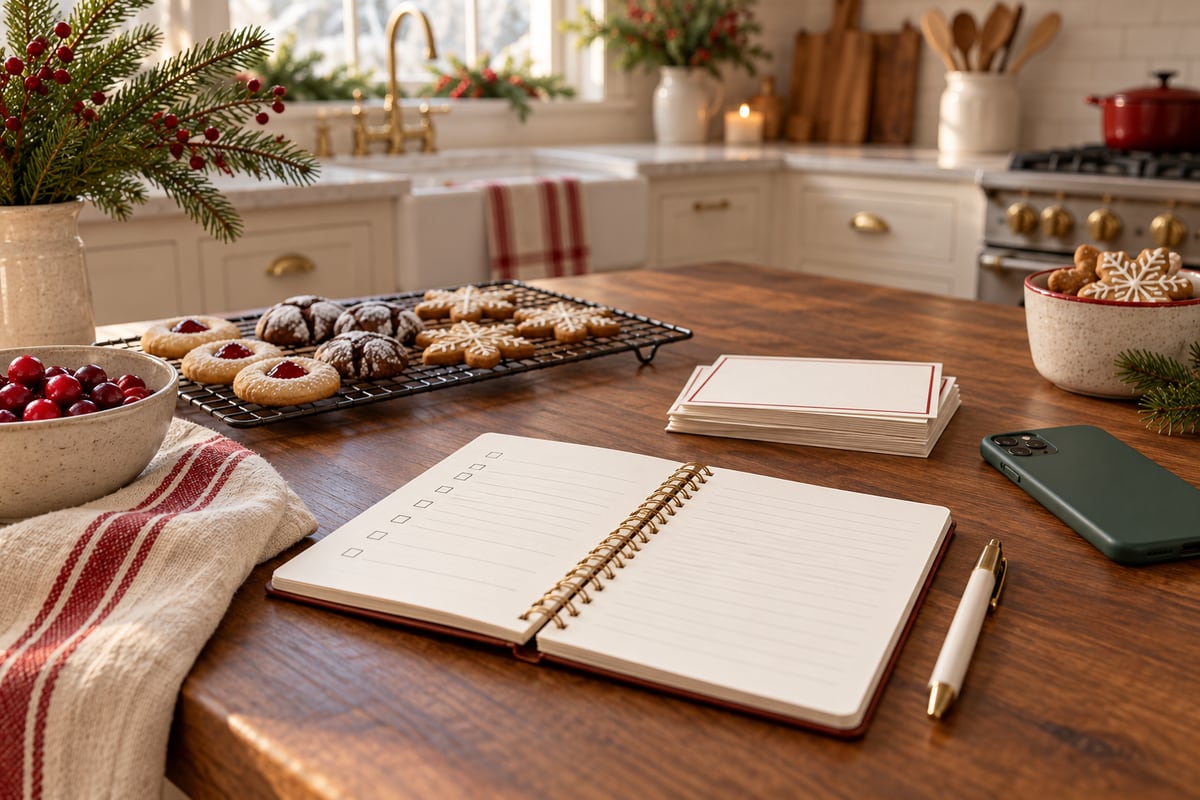
Decide whether guests are bringing cookies only to trade, cookies for a shared tasting, or both. A tasting-and-swap party feels generous, but the tasting plate should be a separate small sample so people do not take from the cookies reserved for take-home assortments. Tell guests whether homemade, bakery-bought, family recipes, or any of those options are welcome. A store-bought contribution can be a kind, practical option for someone short on time.
Ask each baker to claim a broad cookie type when they RSVP—such as bar, drop, crisp, filled, or decorated—rather than reserving a specific family recipe. That reduces a table of near-identical sugar cookies while leaving guests room to choose what they like making. Give a clear reply date, the party window, and a note about whether children will attend or help with the exchange.
Use one batch formula guests can calculate
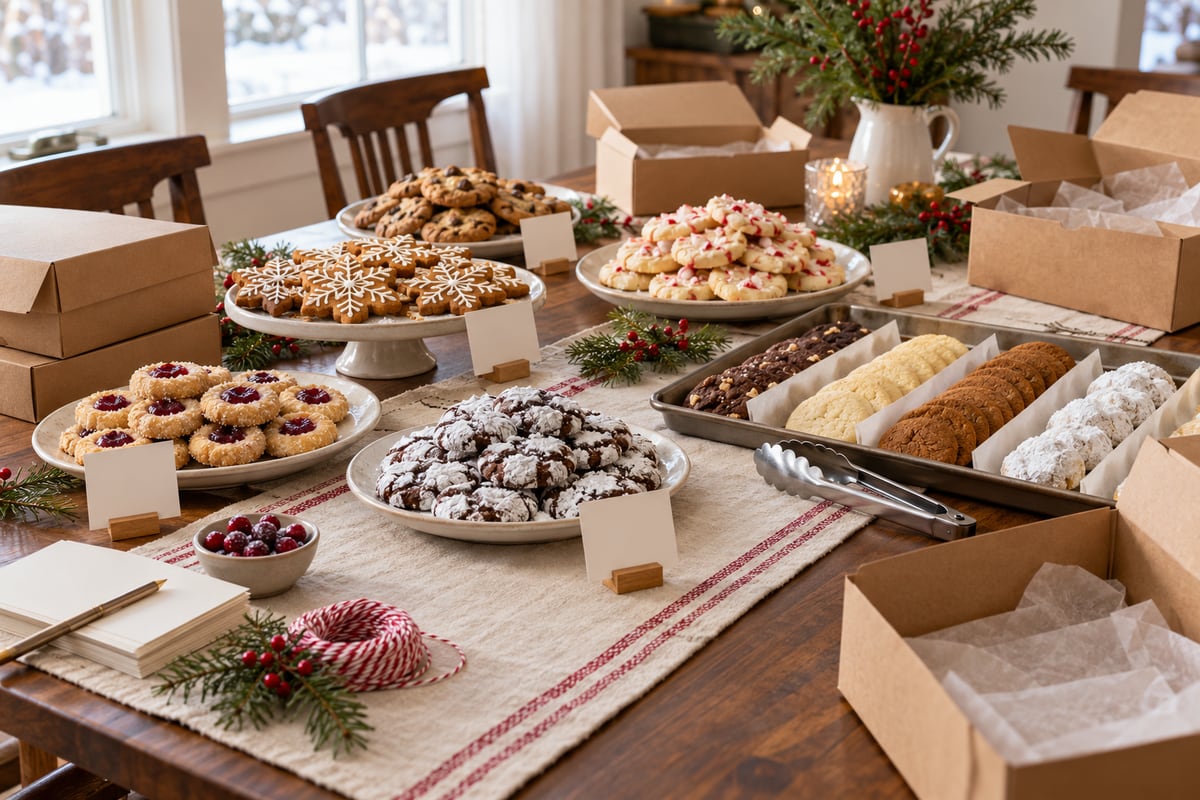
Count the people who will receive a take-home assortment, then choose how many pieces each baker contributes to each recipient. A useful small-party example is three cookies per recipient from every baker. If eight people are each contributing and each baker keeps their own batch out of the exchange, each baker brings 21 trade cookies for the other seven people, plus a small separate tasting plate. The exchange box then has seven varieties at three pieces each.
That is a planning example, not a universal cookie-swap rule. For a bigger guest list, a small one-cookie sample from each baker may be enough; for a family event, the host may choose a larger set. Put the exact number in the invitation and confirm the final count after RSVPs. If one guest is not baking, decide whether they are a recipient and include them in each baker's calculation. Never leave the math to a last-minute guess at the table.
Keep the ingredient card with its cookie tray
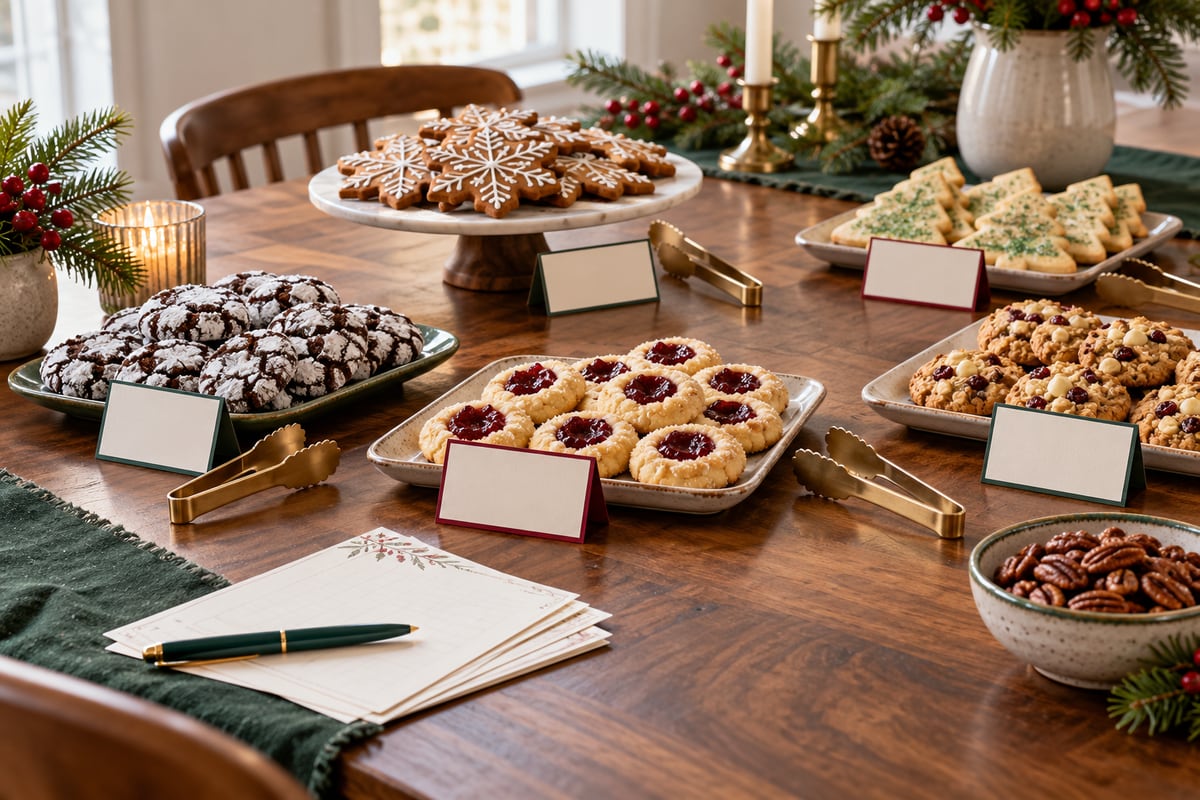
Ask every baker to bring a card listing the cookie name and its ingredients, or a printed ingredient list for a packaged product. If the recipe includes common allergens, make them easy to spot. FDA recognizes nine major food allergens in the United States: milk, eggs, fish, crustacean shellfish, tree nuts, peanuts, wheat, soybeans, and sesame. The card is a communication aid for guests; it does not prove a cookie is safe for someone with a serious allergy.
Use a separate serving utensil for each tray and do not move cookies between platters after the labels are set. Shared tongs, crumbs, or a knife can create cross-contact. If a guest tells you about an allergy, ask what they need and be honest about the shared kitchen and table. Do not promise an item is allergen-free unless you can verify its ingredients and preparation conditions. Place any uncertain item aside and let the guest make the call.
Arrange the room as arrival, tasting, exchange, and packing
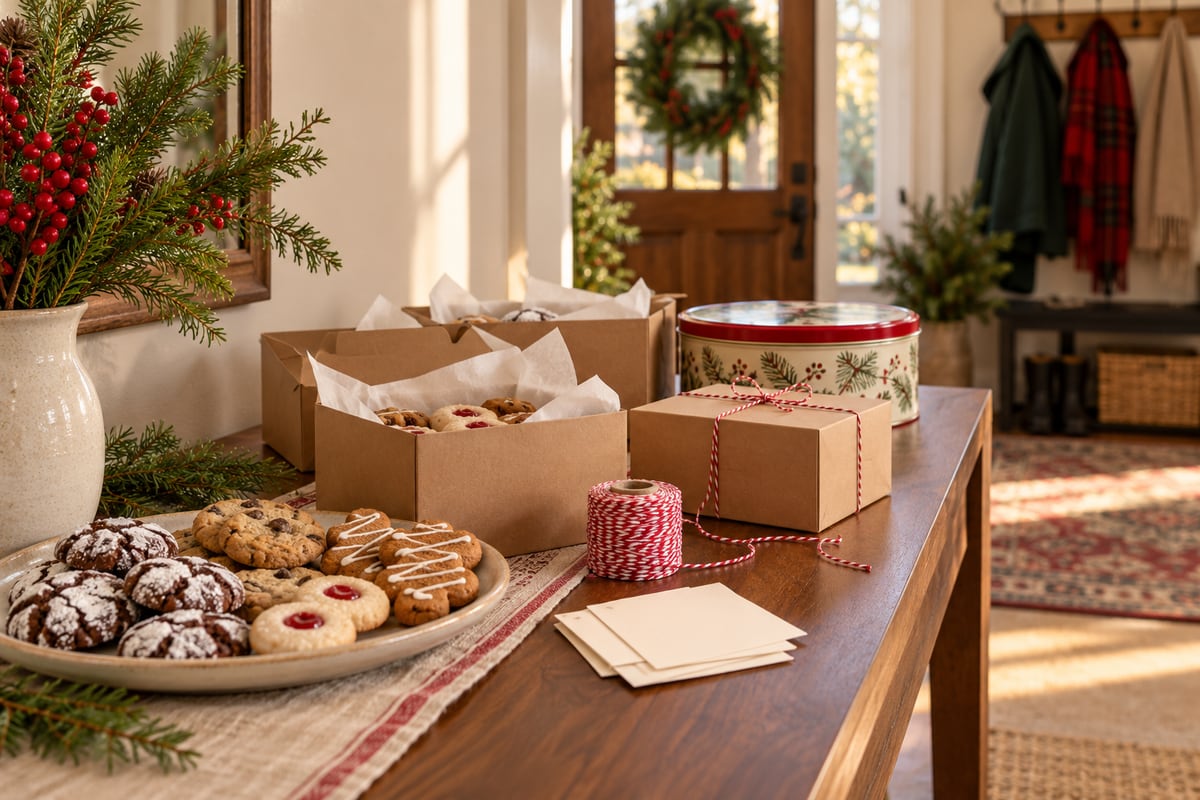
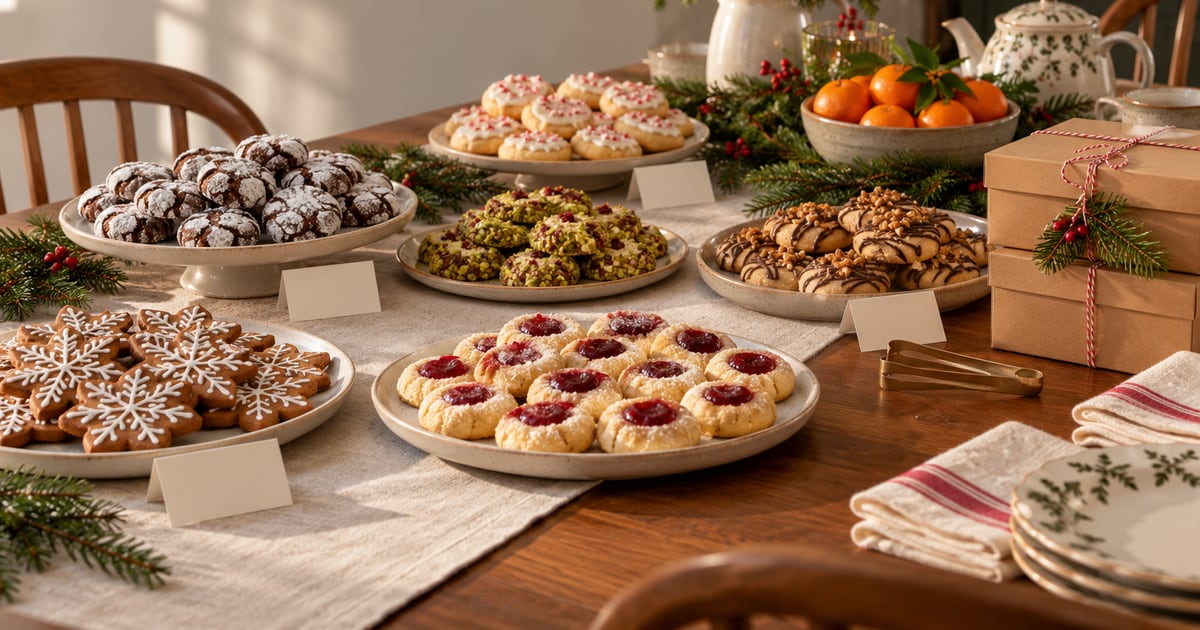
Give arriving guests one clear place to set a covered container, coat, and recipe card. Put tasting cookies on a separate table or end of the counter so a guest can sample without interrupting the sorting area. Arrange trade batches in a line with their ingredient cards visible. Leave enough elbow room for people to move along one side instead of reaching across other trays.
Put the take-home containers and parchment near the exit, but keep them away from active food prep and the entry bottleneck. Each person can move down the line, take the planned portion from each baker, and close their box before chatting at the door. If space is tight, call recipients in small groups or let each person select a labeled assortment from a pre-portioned row. A calm, short route works better than a decorated table that blocks the kitchen.
Keep the food plan small and the safety notes specific
Cookies are the event, so refreshments can stay simple: water, coffee or tea, one festive drink, and one savory bite if guests are staying through a meal window. Avoid adding a second elaborate dessert project. If you serve a perishable dip, cream filling, or another item that needs temperature control, follow its recipe and package directions and keep backup portions chilled. FoodSafety.gov's party guidance says perishable food should not sit at room temperature for more than two hours, or one hour when the serving area is above 90°F.
Do not invite guests to taste raw cookie dough or uncooked batter. CDC explains that uncooked flour and raw eggs can carry germs; ready-to-eat samples should be fully baked or made with a product specifically intended to be eaten without baking. Wash hands and serving tools after handling raw ingredients. These cautions belong to preparation and perishable refreshments; they are not a reason to treat every dry cookie as though it were a cream-filled pastry.
Reverse timeline: two weeks to party day
Two weeks before, choose the guest count, date, exchange format, and per-recipient number. Send the invitation with the reply deadline, the cookie-type sign-up, ingredient-card request, and whether guests should bring a container. One week out, confirm who is participating and recalculate each baker's number. Choose a backup bakery option in case someone gets sick or a batch does not work.
The day before, clear a stable surface for trays and containers, put out recipe cards and labels, and make refrigerator room only for items that actually require chilling. On party day, set out the separate tasting plate, then place trade batches and their cards when guests arrive. Keep the exchange count where you can see it, move through the line after everyone is present, and reserve time for packing before the stated end of the party.
SOURCES
Sources & references
These links support factual rules, quantities, safety guidance, or planning context. The final prioritization and sequencing in this guide are editorial decisions. See how sources are chosen.
- Public guidanceFDA — Food Allergiesfda.gov
- Public guidanceFoodSafety.gov — Food Safety Tips for DIY Wedding Foodfoodsafety.gov
- Public guidanceCDC — Raw Flour and Doughcdc.gov
FAQ
Questions people ask before guests arrive
How many cookies should each person bring to a cookie exchange?
Set a number from the recipient count instead of using a one-size-fits-all dozen rule. For eight contributing guests, three cookies for each of the other seven guests means 21 trade cookies per baker, plus a small separate tasting plate if you want one.
Should guests bring cookies for tasting and trading?
They can, but keep the tasting tray separate from the measured trade batch. Tell guests the two amounts in the invitation so everyone knows which cookies will be sampled and which ones are reserved for take-home assortments.
What should an ingredient card include?
Include the cookie name and the full ingredient list or the product label for packaged cookies. Call out known major allergens clearly, but do not promise a cookie is allergy-safe when it was prepared in a shared kitchen or served beside other batches.
What is a low-stress alternative to homemade cookies?
Allow bakery cookies or a host-provided contribution as an explicit option. The point is a shared assortment, not a test of baking skill. Keep the ingredient information with store-bought items and count them using the same per-recipient rule.